Dig It - 11/11/25
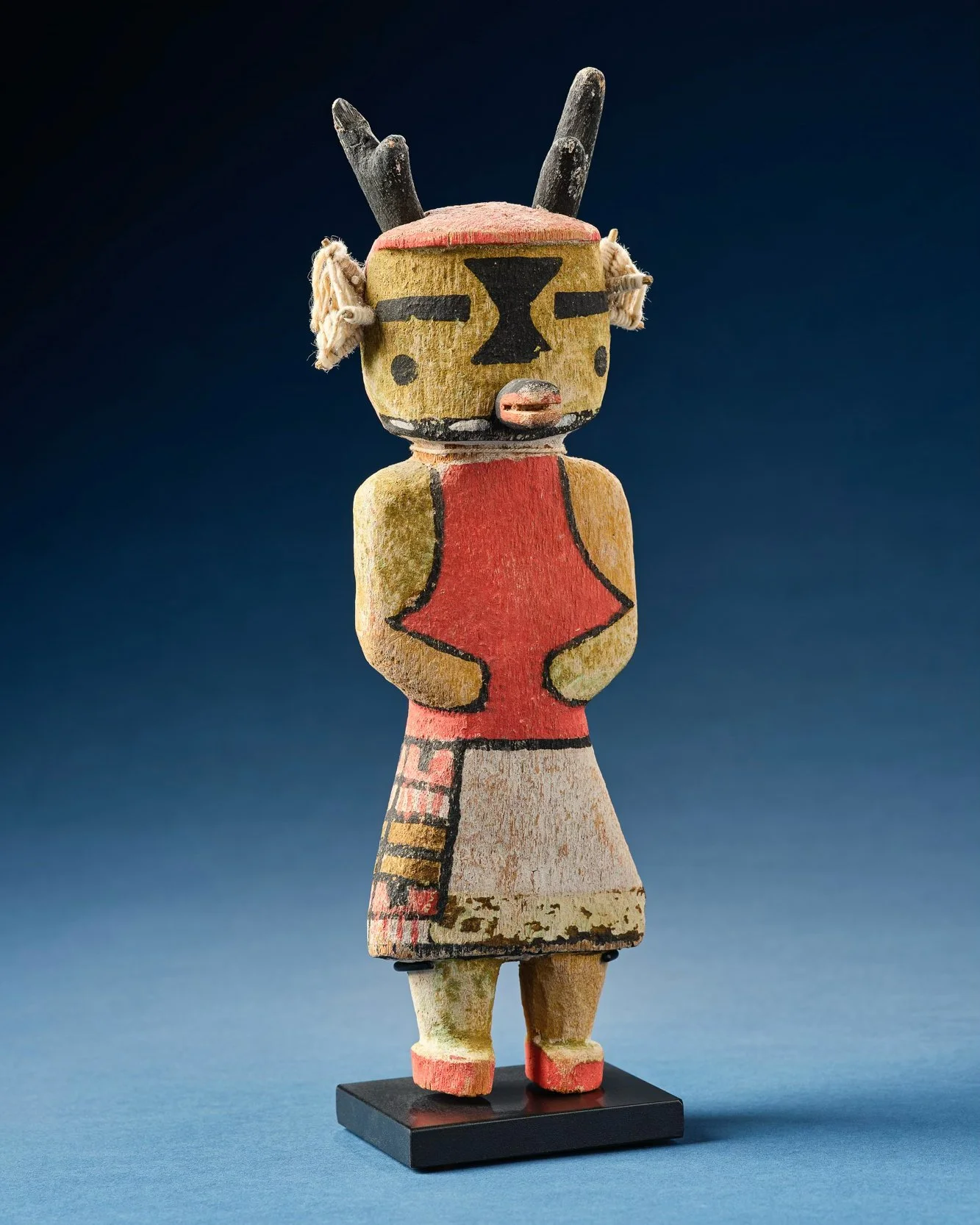
Once again, here we are, Fellow Seekers. Today we are going to discuss a late 19th- to early 20th-century Hopi Antelope katsina. I am basing this date on a couple criteria; first, the use of “spit green” pigment, which is a term used by dealers and collectors to note a pigment made from copper carbonate, a natural green pigment that was chewed and then spit onto the surface, the saliva acting as a binder. I don’t know how accurate that is, but the green is definitely made from a natural copper mineral. The white and black pigments also appear to be natural, while the salmon red is possibly a commercial pigment. Other early traits are the simplicity of the carving and the relatively large head/mask in proportion to the body.
There is something that attracts me to these earlier katsina carvings. They just seem to have a more powerful quality about them, a closer connection to the supernatural world they represent. Signing off Fellow Seekers, Lonesome.
P.S. This Katsina is for sale.